
SaaS Customer Support Response Time Benchmarks 2026

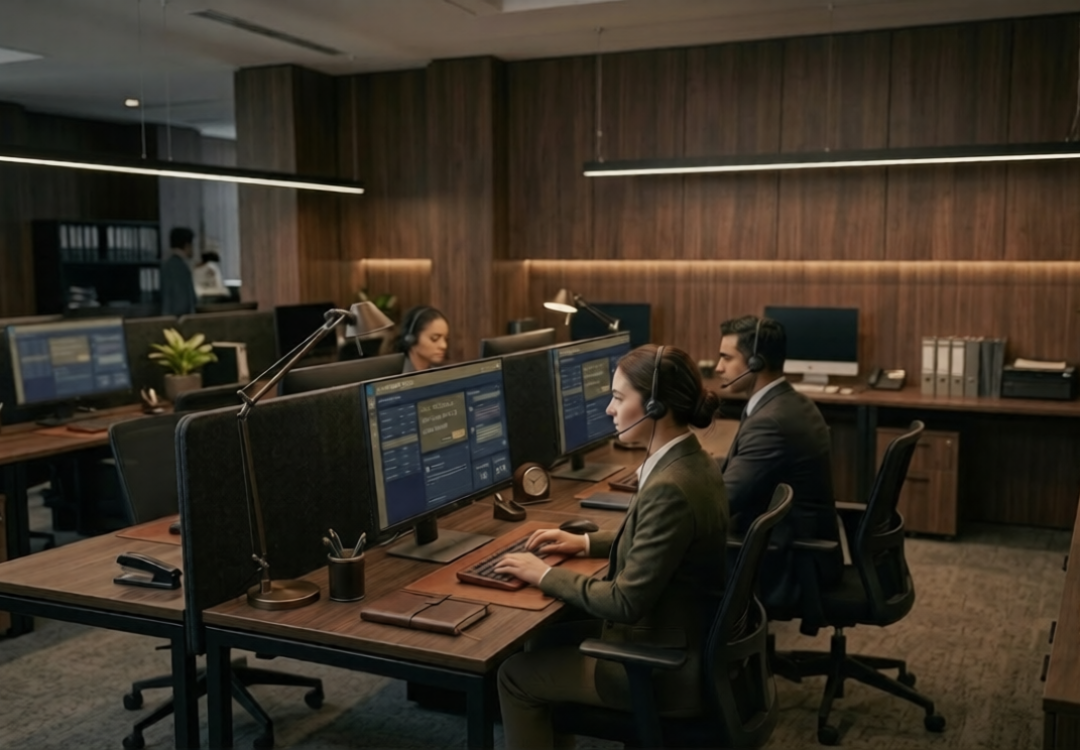
A diverse team of professional customer support specialists in a modern office, wearing headsets and working at multiple computer stations, with a focus on a complex data screen representing SaaS support metrics.

Customers filing support tickets have always had expectations. What changed over the past few years is that those expectations compressed, hard. A response time that felt adequate in 2020 now reads as slow. Companies that have not updated their benchmarks are operating on stale targets and setting SLAs that no longer reflect what their customers are measuring them against.

This post covers what the actual numbers look like in 2026: by channel, by customer tier, and by what fast performers do differently from everyone else. If you are calibrating SLAs, making a hiring case, or evaluating whether your current response times are creating churn risk, this is the data.

What Are the SaaS Customer Support Response Time Benchmarks in 2026?

The short answer: faster than most SaaS teams are currently hitting.

Here is how first response time (FRT) breaks down by channel, based on 2026 industry data:

Channel Industry Avg FRT Top 20% Target “Fast Mover” Threshold
Live chat ~2 minutes Under 60 seconds Under 40 seconds
Email 12 hours Under 4 hours Under 1 hour
Phone 3-5 min hold Under 2 minutes Under 60 seconds
Async (ticket/portal) 12-24 hours Under 8 hours Under 4 hours

For live chat, Zendesk’s CX Trends 2026 identifies 40 seconds as a strong FRT benchmark, while SaaS companies average 1 minute 22 seconds, slightly better than the broad technology sector average of 2 minutes.

For email, the gap between expectation and reality is the largest of any channel. 89% of customers expect an email reply within 1 hour. The actual industry average is 12 hours. That gap does not go unnoticed.

For full resolution, not just first response, Jitbit’s analysis of roughly 1,000 SaaS companies found the median resolution time is 82 hours (3 days and 10 hours). The top 20% resolve tickets in 43 hours. The top 5% hit 17 hours. If your team is at the median, that is a significant competitive gap relative to what fast-moving SaaS companies are already doing.

What SaaS Customers Actually Expect in 2026

Customer expectations around response time are now shaped partly by B2C experience. Someone who gets a live chat response in 30 seconds on a retail site brings that expectation to your SaaS support channel. The benchmarks are cross-contaminating.

According to Zendesk’s CX Trends 2026 report, 63% of customers rank speed of response as the number one factor in a support experience, ahead of resolution speed at 57% and channel availability at 49%. Many support teams have historically optimized for resolution quality. The data says customers weight response speed higher.

Fullview’s 2025 Customer Support Metrics report adds detail: 90% of customers rate immediate response as critical, and 60% define “immediate” as within 10 minutes. That 10-minute threshold is worth noting. Not 1 hour. Not same-day. Ten minutes, during business hours, for initial acknowledgment.

For B2B SaaS, expectations also vary by tier. Enterprise contracts typically include SLA terms specifying 1-2 hour response for critical issues. Standard plan customers more commonly expect 4-8 hours. But what customers expect and what they will tolerate before a cancellation decision are different thresholds, and the distance between them is narrowing.

What Slow Response Times Cost SaaS Companies

Response time is not just a support operations metric. It has a measurable connection to revenue retention.

According to Vitally’s 2025 Churn Rate Benchmarks, customers who experience one poor support interaction are 50% more likely to churn within 6 months. That is a single bad experience, not a pattern of failures.

The channel-level data on email is stark. Research compiled by Ringly.io’s 2026 response time analysis shows sub-one-hour email responses achieve 71% customer retention, compared to just 48% for responses that take 24 hours. A 23-percentage-point retention difference based almost entirely on wait time.

First contact resolution compounds this further. Fullview’s benchmark data shows improving FCR reduces churn by 67%. A customer who gets a correct answer quickly is far more likely to stay than one who gets a correct answer eventually, after follow-ups.

For a SaaS company at $5M ARR spending the industry-median 8% on support and success, a churn reduction of even 1-2 percentage points translates directly to ARR recovery. The response time investment tends to pay for itself.

How Benchmarks Vary by Channel, Tier, and Team Configuration

Enterprise vs. Standard Tier

Enterprise customers expect defined SLAs and faster response at every severity level. A standard critical-issue SLA in enterprise B2B SaaS runs 1-2 hours for first response, 4-8 hours for resolution. Standard plan customers typically receive 4-6 hour email FRT targets, with 24-hour resolution on non-critical issues.

The mistake many SaaS support teams make is applying one benchmark across all customer segments. A startup on a $49/month plan and an enterprise paying $50,000 per year should not be routed identically. Tier-based SLA design is the difference between sustainable support operations and a team constantly triaging without a framework.

Time Zone Coverage and After-Hours Gaps

We operate support teams across the US, Germany, and Pakistan. The coverage model matters because FRT benchmarks are often cited as business-hours figures, but support volume on a global product does not stop at 5 PM. After-hours tickets keep arriving.

For SaaS companies with customers across multiple regions, a benchmark of “4 hours during business hours” can translate to a 14-hour gap in practice, if no coverage exists outside a single time zone. The teams that hit consistent FRT numbers are the ones that have solved the coverage problem, not just the headcount problem.

Chat vs. Email vs. Async

Live chat benchmarks are the tightest because the channel creates an expectation of synchronous communication. A 5-minute chat response is already slow for most customers. Email carries a softer expectation, but softer does not mean forgiving. Async channels (in-app messaging, portal tickets) sit between the two, but customers increasingly conflate all of them when forming an opinion about your support quality.

AI’s Impact on SaaS Response Time Benchmarks

AI is compressing FRT numbers for teams that have deployed it at scale. According to Freshworks’ 2025 benchmark data, AI-powered tools drove a 55% reduction in average first response time, and AI agents now deflect over 45% of incoming queries before a human agent touches them.

This means AI is moving the goalposts on what “fast” looks like. The top 5% FRT threshold in 2026 is closer to 5-10 minutes than the 16-minute benchmark from 2017. Teams relying on headcount growth alone to improve FRT are falling behind teams that have layered AI into first-response handling.

The caveat worth stating plainly: AI deflection rates and AI-only resolution rates are not the same thing. A chatbot that deflects 45% of tickets by sending customers to a help center is not the same as one that actually resolves 45% of tickets. Measuring the right outcomes matters. For anything beyond Tier 1, human-in-the-loop handling remains the standard that enterprise customers expect.

Frequently Asked Questions.

1. What is the average first response time for SaaS customer support in 2026?

The average first response time for SaaS customer support in 2026 is approximately 1 minute 22 seconds for live chat and 12 hours for email. Top-performing SaaS teams target under 40 seconds for live chat and under 1 hour for email. According to Jitbit's analysis of roughly 1,000 SaaS companies, median full resolution time is 82 hours, with top 5% reaching 17 hours.

Response time has a direct and measurable effect on SaaS churn. Vitally's 2025 Churn Rate Benchmarks show customers who experience a single poor support interaction are 50% more likely to churn within 6 months. Fullview data shows first contact resolution improvements reduce churn by 67%. Sub-one-hour email responses achieve 71% retention versus 48% for 24-hour responses (Ringly.io, 2026).

Enterprise B2B SaaS companies typically commit to first response times of 1-2 hours for critical issues and 4-8 hours for standard issues. These SLA targets are usually written into enterprise contracts. Standard plan customers typically receive 4-6 hour FRT targets. Setting tier-specific SLAs rather than a single benchmark is the recommended approach for any SaaS company with distinct customer segments.

According to Zendesk's CX Trends 2026 report, 63% of customers rank speed of response as the number one factor in a support experience. Fullview's 2025 data shows 90% of customers rate immediate response as critical, with 60% defining "immediate" as within 10 minutes. Separately, 89% of customers expect an email reply within 1 hour.

According to Freshworks' 2025 benchmark report, AI-powered tools drove a 55% reduction in average first response time for teams that deployed them at scale, with AI agents deflecting over 45% of incoming queries. This is compressing top-performer thresholds significantly. Teams not using AI assistance for first response are increasingly behind industry leaders on FRT metrics, though AI-only resolution and AI deflection are different metrics and should be tracked separately.

arrow

Interested in our services and digital support solutions? Tell us about your project!

What Happens Next?

We call back in 10-30 minutes, guaranteed!

Subscribe Our Newsletter

Customers filing support tickets have always had expectations. What changed over the past few years is that those expectations compressed, hard. A response time that felt adequate in 2020 now reads as slow. Companies that have not updated their benchmarks are operating on stale targets and setting SLAs that no longer reflect what their customers are measuring them against.

This post covers what the actual numbers look like in 2026: by channel, by customer tier, and by what fast performers do differently from everyone else. If you are calibrating SLAs, making a hiring case, or evaluating whether your current response times are creating churn risk, this is the data.

What Are the SaaS Customer Support Response Time Benchmarks in 2026?

The short answer: faster than most SaaS teams are currently hitting.

Here is how first response time (FRT) breaks down by channel, based on 2026 industry data:

Channel Industry Avg FRT Top 20% Target “Fast Mover” Threshold
Live chat ~2 minutes Under 60 seconds Under 40 seconds
Email 12 hours Under 4 hours Under 1 hour
Phone 3-5 min hold Under 2 minutes Under 60 seconds
Async (ticket/portal) 12-24 hours Under 8 hours Under 4 hours

For live chat, Zendesk’s CX Trends 2026 identifies 40 seconds as a strong FRT benchmark, while SaaS companies average 1 minute 22 seconds, slightly better than the broad technology sector average of 2 minutes.

For email, the gap between expectation and reality is the largest of any channel. 89% of customers expect an email reply within 1 hour. The actual industry average is 12 hours. That gap does not go unnoticed.

For full resolution, not just first response, Jitbit’s analysis of roughly 1,000 SaaS companies found the median resolution time is 82 hours (3 days and 10 hours). The top 20% resolve tickets in 43 hours. The top 5% hit 17 hours. If your team is at the median, that is a significant competitive gap relative to what fast-moving SaaS companies are already doing.

What SaaS Customers Actually Expect in 2026

Customer expectations around response time are now shaped partly by B2C experience. Someone who gets a live chat response in 30 seconds on a retail site brings that expectation to your SaaS support channel. The benchmarks are cross-contaminating.

According to Zendesk’s CX Trends 2026 report, 63% of customers rank speed of response as the number one factor in a support experience, ahead of resolution speed at 57% and channel availability at 49%. Many support teams have historically optimized for resolution quality. The data says customers weight response speed higher.

Fullview’s 2025 Customer Support Metrics report adds detail: 90% of customers rate immediate response as critical, and 60% define “immediate” as within 10 minutes. That 10-minute threshold is worth noting. Not 1 hour. Not same-day. Ten minutes, during business hours, for initial acknowledgment.

For B2B SaaS, expectations also vary by tier. Enterprise contracts typically include SLA terms specifying 1-2 hour response for critical issues. Standard plan customers more commonly expect 4-8 hours. But what customers expect and what they will tolerate before a cancellation decision are different thresholds, and the distance between them is narrowing.

What Slow Response Times Cost SaaS Companies

Response time is not just a support operations metric. It has a measurable connection to revenue retention.

According to Vitally’s 2025 Churn Rate Benchmarks, customers who experience one poor support interaction are 50% more likely to churn within 6 months. That is a single bad experience, not a pattern of failures.

The channel-level data on email is stark. Research compiled by Ringly.io’s 2026 response time analysis shows sub-one-hour email responses achieve 71% customer retention, compared to just 48% for responses that take 24 hours. A 23-percentage-point retention difference based almost entirely on wait time.

First contact resolution compounds this further. Fullview’s benchmark data shows improving FCR reduces churn by 67%. A customer who gets a correct answer quickly is far more likely to stay than one who gets a correct answer eventually, after follow-ups.

For a SaaS company at $5M ARR spending the industry-median 8% on support and success, a churn reduction of even 1-2 percentage points translates directly to ARR recovery. The response time investment tends to pay for itself.

How Benchmarks Vary by Channel, Tier, and Team Configuration

Enterprise vs. Standard Tier

Enterprise customers expect defined SLAs and faster response at every severity level. A standard critical-issue SLA in enterprise B2B SaaS runs 1-2 hours for first response, 4-8 hours for resolution. Standard plan customers typically receive 4-6 hour email FRT targets, with 24-hour resolution on non-critical issues.

The mistake many SaaS support teams make is applying one benchmark across all customer segments. A startup on a $49/month plan and an enterprise paying $50,000 per year should not be routed identically. Tier-based SLA design is the difference between sustainable support operations and a team constantly triaging without a framework.

Time Zone Coverage and After-Hours Gaps

We operate support teams across the US, Germany, and Pakistan. The coverage model matters because FRT benchmarks are often cited as business-hours figures, but support volume on a global product does not stop at 5 PM. After-hours tickets keep arriving.

For SaaS companies with customers across multiple regions, a benchmark of “4 hours during business hours” can translate to a 14-hour gap in practice, if no coverage exists outside a single time zone. The teams that hit consistent FRT numbers are the ones that have solved the coverage problem, not just the headcount problem.

Chat vs. Email vs. Async

Live chat benchmarks are the tightest because the channel creates an expectation of synchronous communication. A 5-minute chat response is already slow for most customers. Email carries a softer expectation, but softer does not mean forgiving. Async channels (in-app messaging, portal tickets) sit between the two, but customers increasingly conflate all of them when forming an opinion about your support quality.

AI’s Impact on SaaS Response Time Benchmarks

AI is compressing FRT numbers for teams that have deployed it at scale. According to Freshworks’ 2025 benchmark data, AI-powered tools drove a 55% reduction in average first response time, and AI agents now deflect over 45% of incoming queries before a human agent touches them.

This means AI is moving the goalposts on what “fast” looks like. The top 5% FRT threshold in 2026 is closer to 5-10 minutes than the 16-minute benchmark from 2017. Teams relying on headcount growth alone to improve FRT are falling behind teams that have layered AI into first-response handling.

The caveat worth stating plainly: AI deflection rates and AI-only resolution rates are not the same thing. A chatbot that deflects 45% of tickets by sending customers to a help center is not the same as one that actually resolves 45% of tickets. Measuring the right outcomes matters. For anything beyond Tier 1, human-in-the-loop handling remains the standard that enterprise customers expect.

Frequently Asked Questions.

1. What is the average first response time for SaaS customer support in 2026?

The average first response time for SaaS customer support in 2026 is approximately 1 minute 22 seconds for live chat and 12 hours for email. Top-performing SaaS teams target under 40 seconds for live chat and under 1 hour for email. According to Jitbit's analysis of roughly 1,000 SaaS companies, median full resolution time is 82 hours, with top 5% reaching 17 hours.

Response time has a direct and measurable effect on SaaS churn. Vitally's 2025 Churn Rate Benchmarks show customers who experience a single poor support interaction are 50% more likely to churn within 6 months. Fullview data shows first contact resolution improvements reduce churn by 67%. Sub-one-hour email responses achieve 71% retention versus 48% for 24-hour responses (Ringly.io, 2026).

Enterprise B2B SaaS companies typically commit to first response times of 1-2 hours for critical issues and 4-8 hours for standard issues. These SLA targets are usually written into enterprise contracts. Standard plan customers typically receive 4-6 hour FRT targets. Setting tier-specific SLAs rather than a single benchmark is the recommended approach for any SaaS company with distinct customer segments.

According to Zendesk's CX Trends 2026 report, 63% of customers rank speed of response as the number one factor in a support experience. Fullview's 2025 data shows 90% of customers rate immediate response as critical, with 60% defining "immediate" as within 10 minutes. Separately, 89% of customers expect an email reply within 1 hour.

According to Freshworks' 2025 benchmark report, AI-powered tools drove a 55% reduction in average first response time for teams that deployed them at scale, with AI agents deflecting over 45% of incoming queries. This is compressing top-performer thresholds significantly. Teams not using AI assistance for first response are increasingly behind industry leaders on FRT metrics, though AI-only resolution and AI deflection are different metrics and should be tracked separately.

arrow

Interested in our services and digital support solutions? Tell us about your project!

What Happens Next?

We call back in 10-30 minutes, guaranteed!

Subscribe Our Newsletter