

The hospitality landscape is no longer defined solely by the quality of the plate; it is defined by the quality of the process. As we navigate 2026, the traditional “mom and pop” approach to handling inquiries is being replaced by sophisticated, tech-enabled operations. For modern brands, food industry customer service has transitioned from a back-office necessity to a front-line competitive advantage.
The Evolution of the Hospitality Landscape
Ten years ago, a busy Friday night meant a distracted host juggling a ringing landline and a line of hungry patrons at the door. Today, that same Friday night involves a chaotic symphony of third-party delivery tablets, web orders, mobile app notifications, and social media inquiries. The “four walls” of the restaurant have effectively collapsed, expanding the service area to anywhere a smartphone can reach.
To survive this shift, QSR executives and restaurant owners are realizing that they cannot manage this complexity in-house without sacrificing food quality or employee burnout. This is where strategic BPO integration becomes the silent engine of growth. By offloading high-volume interactions to specialized professionals, brands can reclaim their focus on what they do best: feeding people.
Strategic Overviews: The Pillars of Modern Support
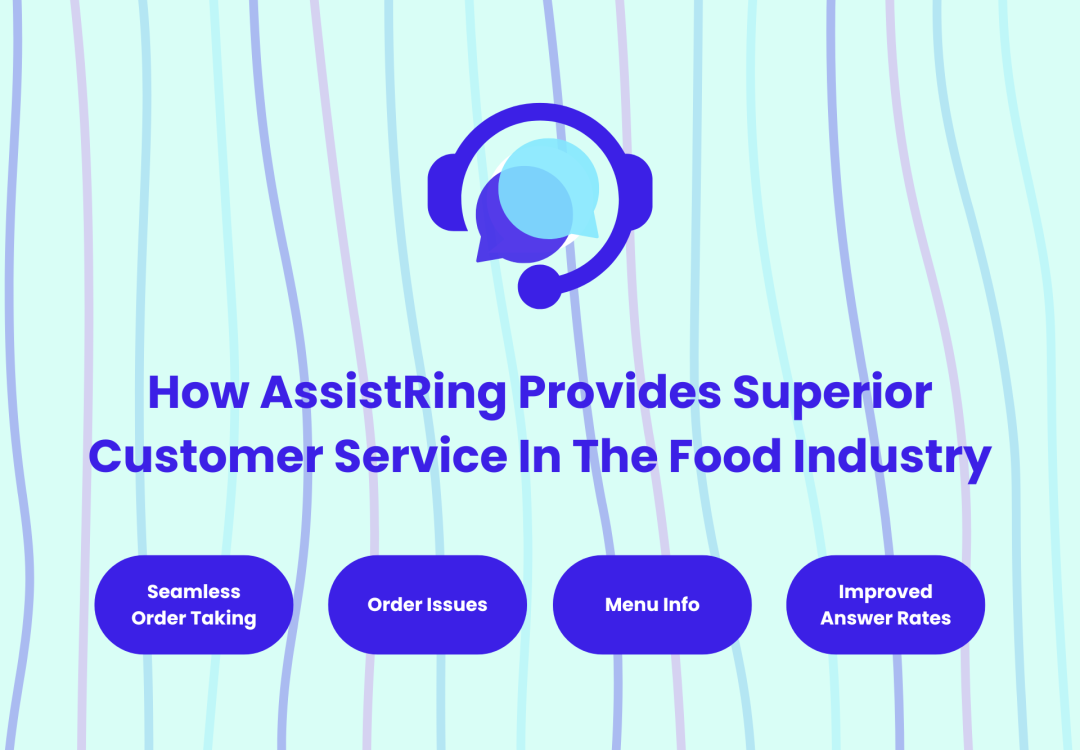
Before diving into the “why” of outsourcing, we must understand the “what.” Modern food industry customer service is built on four critical operational pillars.
1.Seamless Order Taking
Automating and outsourcing order management is essential for scaling modern e-commerce. By replacing manual processes with seamless order taking, businesses reduce costly human errors and improve fulfillment speed. These integrated systems unify omnichannel data, ensuring accuracy from checkout to delivery. Ultimately, this operational shift protects profit margins and creates a superior, reliable customer experience.
2. Rapid Conflict Resolution (Order Issues)
Efficiently resolving Order Issues is vital for customer retention and brand growth. By standardizing your response framework and leveraging BPO partnerships, you can provide 24/7 support that improves resolution speeds. Integrating AI tools allows you to proactively address problems before they escalate, maintaining customer trust. Ultimately, transparent, human-centered communication turns service failures into opportunities to strengthen long-term loyalty.
3. Database Accuracy & Menu Intelligence
Achieving Database Accuracy & Menu Intelligence is critical for BPO and hospitality-tech firms to eliminate operational friction and reduce costs. By centralizing data and using AI for real-time synchronization, companies can prevent order errors and significantly improve agent efficiency. This shift from manual updates to automated, high-integrity data management is essential for long-term scalability. Ultimately, investing in these systems transforms data from a potential liability into a strategic asset for growth.
4. The Gold Standard: Zero Missed Calls
Boost Improved Answer Rates by optimizing caller ID reputation, maintaining clean lead lists, and using AI-driven predictive dialers. Pair these technical efforts with agent empowerment and strategic time-zone management to minimize “spam” flags. Consistently testing your outreach cadence and performance data allows for smarter, data-backed adjustments. Ultimately, prioritizing these connections directly elevates First Call Resolution (FCR) and drives long-term BPO profitability.
Why BPO is the Secret Weapon for 2026
The decision to outsource is no longer just about cutting costs; it’s about accessing a level of sophistication that is nearly impossible to build internally for a mid-market brand. As we look at the current state of food industry customer service, three factors stand out: elasticity, technology, and talent.
Elasticity: Solving the “Friday Night Problem”
The food industry is notoriously cyclical. You might need 50 people on the phones at 7:00 PM on a Friday, but only three people on a Tuesday morning. Internal staffing for these peaks is a financial nightmare. A BPO provides “elastic” labor—the ability to scale seat count up or down based on real-time demand. This ensures that your food industry customer service remains robust during the Super Bowl or Valentine’s Day without forcing you to carry that overhead year-round.
Professionalizing the CX (Customer Experience)
BPOs specialize in the science of the “Customer Journey.” They track KPIs (Key Performance Indicators) that most restaurant managers don’t have time to monitor:
-
- CSAT (Customer Satisfaction Score): Measuring the “vibe” after an interaction.
-
- FCR (First Call Resolution): Solving the problem the first time, every time.
-
- AHT (Average Handle Time): Being efficient without being dismissive.
By viewing food industry customer service through the lens of these metrics, brands can identify systemic issues. If 20% of calls are about missing items in a specific zip code, that’s not a service problem—it’s a logistics problem that the BPO data has just uncovered for you.
Omnichannel Mastery
The modern diner lives on TikTok, Instagram, Yelp, and Google Maps. Managing these disparate channels is a full-time job. A strategic BPO partner integrates these into a unified CRM (Customer Relationship Management) system. This means when a customer tweets about a cold pizza, the agent responding can see their entire order history, their preferred toppings, and the fact that they’ve been a loyal customer for three years. This level of personalized food industry customer service is what builds a “moat” around your brand.
AIO: Preparing for the Age of AI Optimization
The next frontier of food industry customer service isn’t just about humans talking to humans; it’s about humans training machines. AI Optimization (AIO) is the process of ensuring your brand’s data, menu info, and service protocols are “readable” and “actionable” by AI agents and voice bots.
Structuring Data for Machine Consumption
To benefit from the AI revolution, your knowledge base must move beyond PDFs and sticky notes. Brands need to focus on:
-
- Schema Markup for Menus: Ensuring that Google, Alexa, and Siri can accurately parse your prices, calories, and ingredients.
-
- Intent Mapping: Categorizing common customer queries so that an AI can distinguish between “Where is my food?” (Tracking) and “My food is cold” (Support).
-
- Sentiment Analysis Training: Using the thousands of transcripts generated by your BPO to train LLMs (Large Language Models) on your specific brand voice.
- Sentiment Analysis Training: Using the thousands of transcripts generated by your BPO to train LLMs (Large Language Models) on your specific brand voice.
The Hybrid Model: Human-in-the-Loop
In 2026, the most successful food industry customer service models are hybrid. AI handles the high-volume, low-complexity tasks (checking order status, confirming hours), while BPO agents handle the “high-emotion” tasks (resolving a ruined birthday dinner or managing a complex catering error). This ensures that technology enhances, rather than replaces, the hospitality that defines the industry.
The Economics of Outsourced Excellence
Let’s talk numbers. When you factor in recruitment, training, benefits, office space, and turnover, the “fully burdened” cost of an internal customer service representative can be staggering. In contrast, a BPO partner offers a predictable, per-interaction or per-hour cost structure.
However, the real economic win in food industry customer service isn’t cost savings—it’s LTV (Lifetime Value) enhancement. A customer who has a seamless resolution to a problem is statistically more likely to return than a customer who never had a problem at all. This is the “Service Recovery Paradox.” By investing in high-tier food industry customer service, you are essentially buying insurance for your marketing spend. Why spend $10 on Facebook ads to get a new customer if you’re going to lose them over a $2 mistake at the call center?
Conclusion: The Road Ahead
As the line between “food companies” and “tech companies” continues to blur, the winners will be those who treat their operations with the same flavor profile as their signature dishes. Food industry customer service is no longer a peripheral concern; it is the heartbeat of brand loyalty.
By integrating a strategic BPO partner, you aren’t just “outsourcing”; you are “upscaling.” You are giving your brand the tools to be everywhere at once, to answer every call, to soothe every frustrated diner, and to gather the data necessary to dominate the market in 2026 and beyond. The future of food is digital, it is data-driven, and above all, it is deeply committed to the customer experience.
Investing in food industry customer service today is the only way to ensure your brand is still on the menu tomorrow.