

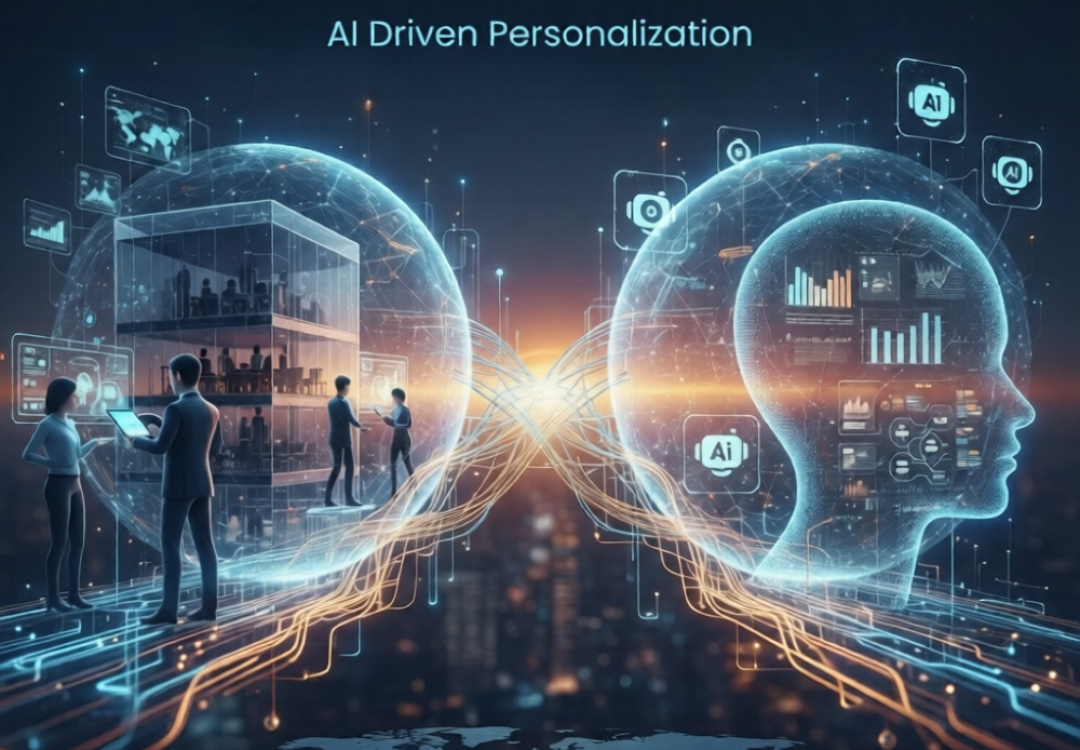
In the current landscape of global commerce, the interface between a brand and its consumer has shifted from physical storefronts to a complex web of bits, bytes, and bots. This evolution has birthed a new mandate for growth: mastering the Digital Customer Experience.
As organizations scale, the challenge is no longer just about providing support; it is about orchestrating a seamless, predictive, and empathetic journey across every digital touchpoint. This guide explores how the modern Business Process Outsourcing (BPO) sector is reinventing itself to meet this demand, utilizing Artificial Intelligence (AI) and human expertise to redefine excellence.
<a name=”introduction”></a>
1. Introduction: The New Standard of Interaction
The modern consumer does not distinguish between “online” and “offline” service; they simply expect a brand to recognize them, understand their history, and resolve their needs instantly. This expectation defines the Digital Customer Experience.
Historically, companies viewed customer support as a reactive necessity—a “firefighting” department designed to handle complaints. Today, the paradigm has shifted toward proactive engagement. By leveraging data and real-time connectivity, brands can now solve problems before the customer even realizes they exist. This transition is not merely a technological upgrade; it is a cultural shift that prioritizes the customer’s time and emotional connection to the brand above all else.
2. The BPO Evolution: More Than Just Phoning It I
The BPO industry is undergoing a massive identity shift. The days of “cheap labor” call centers are fading, replaced by sophisticated Experience Hubs. Modern BPOs are now technology partners that help brands scale their Digital Customer Experience through integrated tech stacks.
The Role of “Human-in-the-Loop” (HITL)
While AI handles the high-volume, low-complexity tasks, the modern BPO agent focuses on high-value interactions.
- Empathy at Scale: Humans handle complex emotional issues that AI cannot yet parse.
- AI Training: BPO staff act as the “feedback loop,” tagging data and refining LLM (Large Language Model) responses to ensure brand voice consistency.
- Strategic Insight: Outsourcing partners now provide “Voice of the Customer” (VoC) analytics, turning raw interaction data into actionable business intelligence.
3. The Pillars of a High-Converting CX Strategy
To build a world-class Digital Customer Experience, organizations must focus on three core pillars:
Omnichannel Consistency
Customers often start a journey on mobile, continue on a desktop, and conclude via a chat app. If they have to repeat their story at each stage, the experience breaks. True omnichannel strategy ensures that context follows the customer across every platform.
Data-Driven Personalization
Personalization is no longer just about using a customer’s first name in an email. It’s about predictive modeling. By analyzing past behavior, brands can offer relevant solutions, such as suggesting a tutorial video for a product the customer just purchased.
Self-Service Empowerment
Modern users are “self-service first.” A robust knowledge base, integrated FAQ, and intelligent “Smart Bots” allow customers to find answers on their own terms. This reduces friction and lowers the burden on live support agents.
4. Technical Optimization: Speed, Security, and UX
A beautiful strategy fails if the underlying technology is clunky. Technical performance is the silent engine of the Digital Customer Experience.
- Page Load Speeds: Every 100-millisecond delay in load time can result in a 7% drop in conversions. Mobile-first design is no longer optional; it is the primary gateway for most consumers.
- Security and Trust: Data privacy is a core component of CX. Balancing seamless logins (like biometrics) with rigorous data protection ensures that the customer feels safe without being frustrated by “security friction.”
- UX Clarity: Navigation should be intuitive. If a user has to search for the “Contact Us” button for more than three seconds, the digital journey has failed.
5. Measuring Success: Beyond the Basic Metrics
Traditional KPIs like Average Handle Time (AHT) are becoming obsolete. While speed matters, it doesn’t tell the whole story of the Digital Customer Experience.
| Metric | Traditional Focus | Modern CX Focus |
| CSAT | Was the problem solved? | How easy was the process? |
| NPS | Would you recommend us? | Is the customer an active advocate? |
| FCR | Fixed on first call. | Fixed before the customer reached out. |
| Sentiment | Keywords used. | Emotional tone and intent analysis. |
By moving toward Customer Lifetime Value (LTV) as the North Star metric, businesses recognize that a single positive digital interaction can secure years of loyalty.
6. AI and Automation: The AIO Advantage
AI Optimization (AIO) is the practice of structuring your digital presence so that both human users and AI agents (like Perplexity or ChatGPT) can easily navigate your information. This is crucial for a future-proof Digital Customer Experience.
Generative AI is reshaping CX in three specific ways:
- Real-Time Translation: Breaking language barriers in global support instantly.
- Summarization: Providing agents with a 3-second summary of a long customer history.
- Churn Prediction: Identifying “at-risk” patterns in customer behavior and triggering an automated retention offer.
7. Common Pitfalls to Avoid
Even the most well-funded digital strategies can stumble. To maintain a high-quality Digital Customer Experience, avoid these traps:
- The Uncanny Valley of Bots: Don’t try to trick customers into thinking a bot is a human. Be transparent about AI usage.
- Siloed Data: If your marketing data doesn’t talk to your support data, your “personalization” will feel fragmented and creepy rather than helpful.
- Over-Automation: If a customer is frustrated, the “Escape to Human” option must be immediate. Nothing kills brand loyalty faster than an infinite loop of “I’m sorry, I didn’t understand that.”
8. Conclusion: The Roadmap to 2030
As we look toward 2030, the synergy between BPO scale and digital agility will be the primary driver of market share. The Digital Customer Experience is no longer a department; it is the brand itself. By bridging the efficiency of modern outsourcing with the precision of AI-driven personalization, companies can create “frictionless” journeys that turn casual browsers into lifelong advocates.
In a world where products are easily replicated, the only true competitive advantage left is how you make your customers feel during every digital interaction.